
April 16, 2017

The Last Blog

By Jack Smith
God must have a sense of humor.
He sent a red bird, of all things, to save my life. You’d have to be an Auburn man to understand the irony.
I was stretched out on a sofa in a modest apartment at Skyland Trail in Atlanta, watching some inane daytime TV show, the kind people who don’t have careers like I had get to watch. It had been another long day of mindfulness meditations, music therapy and memory exercises.This routine had become my life.
Facing divorce and a future that was uncertain at best, I had been miserable my first month at the world-class treatment center. But I was beginning to feel a little better. The fighter in me was making a comeback.
Despite my progress, I was still tired and frustrated. I was a zombie in a pharmaceutical fog most of the day, worn down from shock treatments that rebooted my brain but left me with black holes in my memory. My spirit had been choked out of me by the heavy albatross of guilt from a second suicide attempt that cost me everything except the one thing I had hoped to lose. My life.
I was growing impatient with the side effects from the meds, which made my hands shake more than usual. Taking handfuls of lithium, mood stabilizers and antidepressants does that to some people. For patients like me with a familial tremor, it can be a nightmare. Some tasks are difficult; others are humiliating.


THE COLOR OF LIFE
The worst part of it all? The color of life had faded away.
And then he appeared. A beautiful cardinal landed on a tree just outside my window. It was a proud male with a strong beak and determined eyes behind his black mask. His crest was the most beautiful scarlet color I had ever seen.
It was as if someone changed the television from black and white to the most vivid color imaginable. After a long visit, the cardinal finally flew away. In the days that followed, I stared out the window hoping to see him again. The tranquil grounds outside our apartments were alive with the colors and sounds of spring. And they suddenly looked different.
I had never noticed how beautiful the pink azaleas, white dogwoods and yellow flowers that reminded me of home really were.The cardinal came back the next day and the day after that. I shared this story with my counselor, and she told me to never forget that moment.
“Why?,” I asked her.
“Because that’s the moment you saw color again for the first time in a long time,” she said. “Maybe that cardinal was a sign for you, Jack.”
Nearly three years later, I still believe the cardinal was no coincidence. God sent him to help me keep hope alive. It was a sign: If I kept trusting Him, I would be okay.
Inspired by my fellow patients and encouraged by the amazing staff at Skyland Trail, I kept getting better. The fog of depression finally began to lift with the help of changing meds and therapy, but it took more than the right cocktail of drugs. It took the fighting spirit deep in my bones that had been dormant for too damn long.
Slowly but surely, the warrior inside of me made a comeback. I had been flat on my face on the mat when I arrived at Skyland Trail, pummeled by a cruel disease and crushed by the painful realities I faced after my discharge.
In the early weeks of treatment, it seemed like life could not get any worse. Then one day, I made a decision. I was determined to get up off the mat, knowing the menacing heavyweight would be there waiting for me to pull myself up by the ropes, daring me to stay in the ring.

That’s what millions of people fighting depression and serious mental illness face every day. Major Depressive Disorder is like a boxer who never tires. It often slips out of the shadows and sneaks up behind you, starting with a sucker punch to the kidneys.
Left untreated, depression can beat the life out of you. And it hurts. Mentally, physically and emotionally. My heart breaks every time I talk to someone who is suffering. Depressed fathers who feel they have failed and fear telling anyone they are struggling. Anxious wives who believe they are somehow failing their husbands and their children. Struggling teenagers and college students overcome with angst and stress. I’ve met them all.
I’ve learned a lot about pain and suffering from my own experiences and from those who’ve been brave enough to share their stories with me. I’m grateful to God for them and the lessons suffering has taught me. Suffering brought me closer to the cross. For that reason alone, I would not change anything about my journey.
Suffering and the perseverance that came from it taught me another critical lesson: The pain of depression is only temporary. If you hold on long enough, the storms we all face eventually give way to sunshine.
Surviving those dark days helped me realize the battle will be won, either in this life or the next.
It also taught me nothing is more hurtful than losing hope. Hopelessness leaves us empty inside. It sucks the marrow of life right out of our bones. It takes away our God-given urge to fight that lies deep within us all.
I recently read “Wild at Heart,” a book by John Eldredge, for the second time. I would highly recommend it to any man who feels lost or weak or bored by life. The author poses the central question all men face: “Am I really a man? Have I got what it takes when it counts?” Reading the book again reminded me the fighting spirit I possess was put there by God. He designed me to be more than a nice guy who skates through a dull existence, avoiding risks while fearing danger.
He created me to come through when it counts, even though there are times when I struggle and falter and wonder why it has to be so hard. As Eldredge writes, He created hearts full of passion and a lust for adventure in us all. The hard part is embracing who we were created to be.
I’m still on that journey. I still fall down from time to time, but fear seldom stops me from taking risks or choosing to fight when the battle is on.
I fight because that’s who God made me to be. He gave all of us the strength and capacity to be warriors. Read the book of Ephesians. He promised us if we suit up in the Armor of God every day, we can win any battle we face, no matter how long the odds.
THE REST OF THE STORY
I have a medallion I cherish and a semicolon tattooed on my left ankle. I got the tattoo on my 45th birthday. It was a promise I made to myself—even though I knew my mother would not like it.
The medallion I carried in my pocket is engraved with a warrior suited up in armor given to him by God. The inscription includes the powerful words from Ephesians that strengthen me when my spirit grows weary. It reminds me I’m a warrior when I have God on my side. It was given to me by a good friend who has helped me time and again.
Yes, there are days I still get knocked down. But most of the time, I no longer try and pick myself up off the mat by myself. I rely on my faith, family, friends and the fighter deep within me.
And about that semicolon tattoo. It means my story isn’t over. There is more to come, maybe the best part. If you or a loved one suffering from mental illness is losing hope, don’t despair. Ask God to help you through it not one day but one hour at a time. He will provide the strength you need.
Remember “The Shawshank Redemption?” It’s one of my favorite movies of all time. Do you recall what Red says to Andy in the prison yard? “Hope,” he says while pulling a toothpick from his mouth and pointing it at his friend, “is a dangerous thing.”
I don’t agree. Hope is all we have when the ox is in the ditch and there is no one there to help us pull it out.
Let me tell you the part Hollywood doesn’t like to talk about. Without faith, there can be no hope. My faith saved me from despair. I believe with all my heart God sent that cardinal to perch on the tree just outside my window.
I’ve seen hundreds of cardinals since, and they always remind me to never lose hope again. I could tell you countless amazing stories about times I’ve seen cardinals when I needed a nudge to keep moving, a spark to keep the fire in my heart burning. Several prayer warriors close to me can tell you stories about cardinals they saw while they were praying for me or wondering how I was doing.

IT'S ILLNESS, NOT WEAKNESS
Depression, bipolar disorder, anxiety disorders and other forms of mental illness are medical conditions just like cancer or diabetes. So please hear and understand this point.
Faith alone is not sufficient to treat mental illness. I’m still troubled by surveys showing half of all Christian pastors don’t believe it is a sickness. They apparently think if we just pray hard enough, we don’t need doctors or real medicine.
I’m not sure what they actually believe, but I know the church needs to wake up and care for the countless people in their own pews suffering in silence. I can tell you that from experience.
I pray that all those who may be suffering and wondering why they can’t get better without help will know and remember this: Mental illness is not weakness. It is sickness. And it requires proper medical and therapeutic treatment.
So please, if you are hurting, get help. Take the hardest step—the first one— by telling a friend or loved one. It will make you feel better.
While I’m retiring this blog, my humble efforts to try and help people will never end. This blog has been a blessing and a burden, but I’ve met or talked to countless people who need a little help. And a lot of hope. I just wish I had more time to be there for those who need it.
Those who courageously reached out to me as a result of the blog have helped me more than they will ever know. That’s what happens when we share our stories with people who can really understand them—those who have walked in the heavy shoes of misery.
I still believe what I’ve written before. Secrets lose the power to hurt us when we drag them into the light. That is why we must fight stigma until it no longer exists. We need to continue the progress made toward a less judgmental and more compassionate culture.
VICTORY
On a chilly morning not long ago, I was enjoying a fresh cup of coffee on my back porch. The mug warmed my hands while I sat quietly and listened to the birds. The red wind chimes hanging from above tinkled as a light wind whispered through the naked trees, the pale yellow sun rising in the distance.
I paid $5 for those wind chimes at Dollar General, but they are priceless to me. The wind chimes were not an impulse purchase like some of the random items I often bring home from my favorite discount store.
I love Dollar General. Shopping there makes me feel like a regular person just trying to make it in the world like everyone else pushing around buggies weighed down by so much more than groceries. I often wonder about their stories.
Seeing the wind chimes I wasn’t looking for was not a random occurrence. It was a sign from God. You see, the first one hanging on the rack had a red cardinal made of cheap stained glass perched on top of the chimes. Some might say it’s tacky. I say it has eternal value.
Now every time the wind blows, I remember what may be the most important moment of my life. I remember what the cardinal means to me. Hope. Hope for peace and happiness. Hope for lasting love and an abundant life. Those dreams have begun to become true in my life. That is a miracle.
I’ve fought enough battles to know every day won’t be easy. When I started this blog, I wasn’t sure what to name it. I settled on “One Man’s War.” I had it half right. It is a war. It will never fully go away. But I no longer fight it alone.
I will win it one way or the other, because like Roman soldiers who hooked their shields together for battle, I now fight it with the help of others. And an Almighty and Everlasting God who will never forsake me.
I took another sip of coffee and drank in the beauty of that winter morning, knowing spring will soon arrive. The rich Arabica blend with a touch of sweet cream made me think.
This is what victory tastes like. Thanks be to God.

December 7, 2016

Peace in the storm

By Jack Smith

Ever flip open the Bible and land on a verse you desperately needed that moment? Happened to me today. I want to share it with anyone who's struggling or suffering. It's helped me many times.

When the storms come, I eventually quit praying for them to go away, and I starting praying for peace in the storm. It seems to help.

My heart is with my friends who are hurting today. Friends I know and friends not yet made. May you find peace in the storm. 

"Consider it pure joy, my brothers, whenever you face trials of many kinds, because you know that the testing of your faith develops perseverance. Perseverance must finish its work so that you may be mature and complete, not lacking anything." 

James 1:2-4

November 29, 2016

Let's talk about youth suicide before it's too late

undefined


By Jack Smith

Talking about suicide doesn't increase the risk of suicide.

But we need to talk about it in the right way. And we need to talk about it with our teenagers. Before it's too late.

Suicide breaks hearts. It rips families apart. It devastates friends. And it damages children. That's the dark reality of suicide, which isn't poetic at all. It's grim and it's cold and it's sad.

Ending stigma is part of the challenge, but we have to do more than just talk about suicide. We have to talk about our fears. Our anxiety. Our hurts and our brokenness.

When we bury those emotions for some who struggle with mood disorders, we plant the seeds of suicide along with them.

That's why it's important to begin a healthy discussion with our young people now. 
They need to know it's okay to struggle. They need to know it's okay to ask for help. They need to know an episode of depression or failure or disappointment doesn't have to be the end.

They need to know feelings aren't facts. They're just feelings. And they pass like a night storm that brings wind and rain but is gone before dawn.

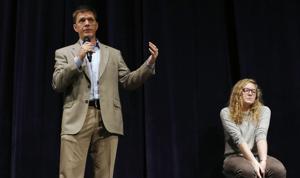
I deeply appreciate Auburn City Schools being proactive on this issue and encouraging my daughter and I to share our story. And I could not be prouder of  her. When we make ourselves vulnerable and share our stories, secrets and stigma lose the power to hurt us. 

Thank you Dr. Karen DeLano, Dr. Shannon Pignato (a gifted and compassionate educator who cares about all of her students) and Joy Stanley.

 I'm especially grateful for Chris Hardman and Daniel Chesser for their professionalism and compassion shown throughout this series...and most of all for their care and concern for the students of Auburn High School.

Suicide is now the second leading cause of death for young people. And it's by far the most preventable.

But only if we have the courage to be vulnerable and start talking.

November 3, 2016

Trump: Draining the swamp or poisoning the well?

This blog is probably not the place for politics.

But as someone who has seen people who are already struggling stung by the insensitive things people say about mental illness, I think the level of public discourse matters.

Words matter. The labels we use matter. The way we talk to people matters.

So does civility. And kindness. And compassion.

Sadly, this election has been like a really bad referee in a rivalry basketball game inside a cramped and hostile gym. The adults have let the atmosphere get too heated and toxic. 

Reason is failing, and tempers are flaring. And somebody’s going to get hurt.

When this election is over, my sincere hope is we can return to a basic level of civility in this country.

As someone who studies history and enjoys politics, I’ve observed that much of the vitriol in tough elections is typically directed from one candidate to the other.

Usually, angry candidates direct their hostility at their opponents, not the voters. 

Never before have I seen so much hate and anger aimed not at an opposing candidate but squarely at the people the President of the United States is supposed to represent: Women. The disabled. Hispanics. The overweight. African-Americans. Entire religions. Immigrants. Reporters. War heroes. Republican Congressmen. Even local elections officials across the nation, who apparently rigged the election weeks before it took place.


It’s ironic that Donald Trump draws cheers when he chants, “Drain the swamp!” Mr. Trump has so thoroughly poisoned the well of decency and diminished the greatness of democracy it may take generations for the pendulum to swing back to some level of normalcy.

And there will be consequences. There are always are. As the pendulum swings back to the vital center where most of us actually live, the standards of decency that make us a civilized people will continue to be knocked down like pins at a bowling alley on $2 pitcher night.

It really is quite unprecedented. And terrifying.

I’m fascinated by the psychology of people who are able to so easily ascribe their anger to “the government,” the Mexicans or the Clintons, while simultaneously failing to show an ability to articulate with any specificity or clarity why they hate them so much, or what a credible solution might be, not counting lazy stereotypes, political mythology or building walls.

Maybe that’s why so many are falling for the notion that the entire game is rigged. All of it, from the opposing coach and the referees to the bookkeeper and the company that manufactured the game clock to the local newspaper that will write up the fake results when the fixed game is over.

That’s another article for another blog, but it would be fun to write “The Politics of Paranoia” or “The Power of Hate.” Its premise could be Donald Trump’s entire presidential campaign, with pages and pages of footnotes of things he actually said, tweeted or did.

People a lot smarter than me have concerns like global instability or a devastating economic malaise (based on his economic plan’s review by scores of credible economists) if Mr. Trump is elected.

That’s out of my wheelhouse, so I’ll stick to civility, our values and our already fragile psyches, which so badly need a leader that can give us hope after sewing so much fear and stoking so much hate.

I would be remiss if I didn’t briefly mention the candidates’ policies on mental health. Check out both websites if you’re interested in issues other than deleted emails and lewd tapes.

I could’ve written Mr. Trump’s mental health plan in five minutes while brushing my teeth. Hillary Clinton actually has credibility on the issue and serious policies to put forward that would give mental illness the attention it so desperately needs.

While coverage of preexisting conditions and equal treatment and benefits for mental illness are all enormously important issues Mr. Trump could care less about, an equally concerning issue is the erosion of lines our leaders simply should not cross. Ever.

Like openly inciting violence. Or flippantly shrugging one’s shoulders at the notion of “Second Amendment people” killing the opposition if we don’t like the final score. Or putting them in jail without due process. Or calling reporters trying to do their jobs “disgusting.” Or shamelessly mocking the disabled on national television.

It feels as though America has collectively become so desensitized to hate speech, threats of violence and this idea that it’s okay for the powerful to humiliate the powerless that we either barely notice or want to quickly forget when one makes a statement so outrageous it would normally disqualify them from a presidential race. Or most book clubs.

Yet because of Donald Trump and those who willingly bathe in his toxic brew of hate, bullying is not only back. It’s cheered as some perverse form of heroism.

Laugh if you will, but can you imagine our playgrounds in a few years?

Or cyberspace? How big of a setback will it be in the fight against cyberbullying if one of the biggest cyberbullies in the history of Twitter is elected President of the United States?

What will happen to young women in frat house bedrooms where those who revere Trump and plaster his name all over their absurdly large trucks (that are never used to actually haul anything) begin to take on his false macho persona or justify their behavior with his?

Wasn’t that what the fuss was all about from Evangelicals when Bill Clinton had oral sex in the Oval Office? Do we not have the same concerns today?

Where are the church leaders and fundamentalists who flip out about legalizing lotteries and what they deem to be deviant sexual behavior? What does their absence say about the state of morality in America today? Or leadership in general? Where is John C. Maxwell when you need him?

Or what about every kitchen table in America?  What if a man who once said he gets furious if his wife doesn’t have dinner ready when he gets home suddenly is the most watched man in the world with the biggest microphone? 

What kind of behavior will he model? What kind of language will he use if he is no longer shackled by friends, handlers, family and focus groups begging him to tone it down? How will that affect our children? Or broadcast television standards? And why aren’t conservative Christians worked up about that?

Or what about the halls of our junior high schools, jammed with kids with raging hormones who don’t yet have good judgment? Will it be okay for the star quarterback to grab little girls "by the pussy" (to quote Mr. Trump) and brag about it to the school paper? Will they be cheered? Do those who support Trump not realize that’s exactly what they are doing?

And why is that suddenly okay after it took decades for society to evolve to a place where women on most levels and in most places were beginning to be respected?

We can justify how we got here all we want. We can blame and be angry at Congress, our changing demographics, the liberal media, aliens who don’t all have the right papers and global economic realities that transformed America, the world and the kind of jobs we now have available.

In other words, we can be mad at reality.

But it’s not healthy to be so angry we don’t even know who we’re actually mad at. Or why we’re so pissed. History shows us that when demagogues use hate to inflame emotions for political gain, common decency, common sense and the common good are endangered.

And all that truly does make America great really is at risk.

Donald Trump has stoked the fires of racism, celebrated misogyny, mocked disabilities, bragged about sexual assault and even graphically described the menstrual cycle of smart professional women who dared challenge him.

If we learn Tuesday that all of that is acceptable to a plurality of Americans, what then? If a man running for President of the United States has said these things under the scrutiny of an election and the media he has threatened to censor, what will be said when he no longer needs our votes?

What will he say to the leaders of foreign nations or the people they represent? How will that affect their view of America as the great hope of the world? Isn’t that we want America to be?

Let’s suppose for a moment Mr. Trump wins the election.

Once the swamp is drained and no monster is found, what then becomes of the bloodlust he created?

Where will the anger of those he has so masterfully manipulated then be directed?

That's when labels will be the least of our worries.


June 30, 2016

Sports are like life: Encouragement works; yelling does not

By Jack Smith

This has everything to do with mental health and nothing to do with mental health. Publishing here because several folks asked me to. 

I posted this on Facebook last night after an experience with little league baseball.
Sports are a lot like life. The battles we learn to fight there may help us when we face far more imposing opponents, like disappointment, loss or mental illness. 

We can all use good coaches to help us through the hard times.
Couple observations about youth sports and coaches.

1. Encouragement works. Yelling does not. (Watch elite coaches who've won National Championships up close and personal and you'll learn this lesson).

2. Children have good memories. So don't tell them one thing before the game and another after a loss. That's called hypocrisy. Kids may not know how to spell it but they know how to smell it. From left field.

3. Respect must be earned. Not demanded.

4. Kids don't care how much you know until they know how much you care. About them. Not the game you are trying to win to prop up your own ego.

5. It's not possible to be objective about your own children. So guard against that blind spot. Everyone else sees it from 10 miles away.

June 5, 2016

Top 10 Tips for Fighting Depression: Keep Fighting

The Greatest reminds us all: Keep fighting. Even when your back is flat on the mat.
By Jack Smith

The death of Muhammad Ali moved me in unexpected ways. He was brash and cocky, but he backed it up. I love Ali because he stood for something—whether you liked it or not. He didn’t care.

He did what HE thought was right. He didn’t spend his days trying to please others or tell them what they wanted to hear. (Paging Jack Smith!)

We can learn a lot from Ali’s life and boxing career.

You know what I learned?

There’s greatness somewhere inside of me even when I can’t see it. All I have to do is never quit searching for it—even when I’m face down on the mat like Joe Frazier after taking a right hook from The Greatest champ who ever lived.

So I credit Ali and a new blog friend who reached out to me a while back from far away and told me I have to keep writing. He said men need help more than I know, and my blog for some reason helps them. Or at least him.

His outreach inspired me to get this post up today. It reminded me that I write this blog to give people hope and help me cope.

So I’m sharing my list of Top 10 Tips to Battle Depression. These are things I try to do in my battle with depression and anxiety. I hope it helps.

I rarely do them all at once. Sometimes my report cards reads like an old “Leave it to Beaver” episode. Wally brings home all A’s. The Beave brings home Bs and Cs—at best. I’m more like The Beave than Wally most of the time.

Here goes, with apologies to Wally for any typos. Posting without much editing is exposure therapy for me:

1. Exercise. Running was once a passion, and it always helped me. It’s like a mental flush. Running is like rebooting my crazy computer, giving me calm and focus. I just started back after a stint on the Disabled List.

I’m already addicted again. You don’t have to run. Swim. Walk. Cycle. Do something even when you don’t feel like getting off the couch—especially when you don’t feel like getting off the couch.

2. Set realistic goals. I try and write down 3 things each night I need to do the next morning. I always start with an easy one. Like “text Fred and tell him Happy Birthday.” It gives me positive momentum. Add one or two things that must be done, like pay the water bill. Do this before bed. It will help you sleep.

3. Get a massage. I don’t know what the research says, but I know what my mind and body think. A good massage always helps me feel better physically and mentally. Even emotionally.

4. Take my meds: All of them. I now use “PillPack,” a fantastic mail-order service for prescriptions. They handle it all. I never deal with drug stores anymore. Pill Pack fills and refills them all and mails me little plastic envelopes that are so easy a monkey could do it.

The one I just ripped open and took said “8 AM Sunday.” It has today’s date and a list of them. You tear out the envelopes you need for each day. No more bottles. I highly recommend PillPack.

5. Focus on family: It’s different in divorce, but I’m happiest if I can really focus on my kids when I’m with them. It’s hard for all of us to turn down the white noise and not worry about things. It’s hard for me, too. But I try mindfulness tips like focusing on the details of what they’re saying or watching what they are doing, noticing the little things. It helps.

May 15, 2016

You can go home: Just take Memory Lane

“If a person is not talented enough to be a novelist, not smart enough to be a lawyer, and his hands are too shaky to perform operations, he becomes a journalist.”

—Norman Mailer


By Jack Smith

This Norman Mailer quote pretty much sums it up.

My heart longs to write for a living, but my head says I’d starve.

I almost went to law school, but I hated my first job. I worked at the biggest firm in the state in a job I started a couple days after graduation. They stuck me in a room with no windows and not enough straight jackets to do tedious discovery work defending an insurance company—a massive company that ripped off a bunch of poor people who didn’t know better. I was miserable.

My girlfriend was four hours away that summer. The whole thing triggered one of my first bouts with major depression in my early 20s. I’d struggled before but never like that. I could not get off the couch except to go to work.  I had no idea why and never told anyone.

When I told the firm I was leaving, one nice lawyer said it’s a shame. He said I wrote good memos and summarized things well. I didn’t take it as a compliment. I remember wondering why he didn’t say, “You’d make a good lawyer, Jack.”

That’s all I wanted to hear. I have enough lawyers in my family to field a basketball team with good subs to come off one heck of a bench. For years, I’ve wondered why I was too scared to become one. I recently figured it out: I was too scared to become one.

So I did something I swore I’d never do. I went home and settled on a career as a journalist at a community newspaper. They were the best 10 years of my life and career. And the hardest. It’s not easy being Superman’s son, but flying is fun even if you’re afraid of heights.

Oh. I almost forgot about the third part of the quote up top: I have a tremor that on some days makes it hard for me to drink coffee in front of other people. Being a surgeon was not an option, even if I hadn't stunk at science my whole life.

I’ve sat through hundreds of lunches and dinners at restaurants and eaten entire meals without taking a single sip of water. That’s what I used to do when my tremor was bad and the waiter filled my glass too close to the top. I was worried I’d spill it everywhere.

I was mocked as a child just a few times and never really got over it until fairly recently. If someone were to make fun of me tomorrow, they might get a shaky middle finger back in their face. It feels good not to care what others think again. I know that's crass and I'm sorry to sound that way. Honesty is liberating, and that's honestly how I feel. And the rest of the truth is most days I do care what others think. And that's misery. 

You may have heard what Norman Mailer said about going home. Or was it Tom Wolfe, who stole his line and put it on the cover of his best book? Either way, I made up a word just now for what at least one of them did: Plagiarism.

“Don’t you know,” a lady once allegedly told Tom Wolfe, “you can’t go home again?”

April 23, 2016

Music & Miracles: The Dream of a Champion

By Jack Smith

I knew a man who had a dream.

He dreamed of peace amidst pain for those who suffered. He dreamed of a better future for his wife and their children and all who suffered from the indignity of a cruel illness and the injustice of hunger.

He dreamed of music and miracles. He dreamed of a cure and an answer to problems that too often leave those of us incapable or unwilling to dream with our hands in our pockets, waiting for someone else to fix it.

His dream was powered by faith and hope, not fear of the final act he knew was coming, no matter how hard he fought.

And he fought—like a champion in the ring—to the end. As those who were blessed to be at his funeral learned, the end was devastating and raw and real and painful. And sweet and powerful and life-giving for those who loved him most and those who didn't know him at all.

He kept swinging and hoping and praying until that final bell tolled. Its sound echoes still, giving hope and life and encouragement to those still fighting the good fight.

What a blessing.

Even as he penned notes to those he loved, knowing his final breath was moments away, he still dreamed of this day and how to make it happen. He challenged us all to fill up a historic stadium and raise $1 million for the causes he believed in.

Despite mighty obstacles and the seeds of doubt sewn by all who said "that's impossible" through the entire journey, he still had a dream.

He dreamed of music and hope and love on a warm spring evening in God's Country. Of thousands gathered together in fellowship to listen to the music that had been the soundtrack of his life and the life he had built with an amazing and beautiful wife.

He kept the dream alive even as his own nightmare played somewhere in the background every day and in the foreground on the hard days. It was set to the haunting score of a movie sure to end in the hardest kind of tragedy, the kind when a bright light is snuffed out far too soon.

He surely felt it. He surely knew it. Those who love him most did, too. Yet he never lost hope. He never lost faith. He never took no for an answer.

He never let the white noise or the black noise or the chattering doubt of naysayers choke the life out of his dream, even as the illness he fought slowly choked the life out of him.

Despite it all, he still had a dream.

He had a dream just like the man who woke up the conscience of a great nation on the steps of the Lincoln Memorial five decade ago.

Sentimentality and emotion may sometimes cause us to overstate the beauty and greatness of a moment in history, a night that may one day be an obscure footnote compared to the greatest speech in American history.

Yet to miss the significance of days and events like this one, when tens of thousands will gather to hear music and witness miracles big and small at a stadium built for a game Kevin Brown loved—regardless of his color blindness and allegiance many of us here in Auburn can't understand—would be like missing the magic and power of music itself. Music, as Kenny Chesney even says, is medicine for the soul.

Medicine for the soul

Music has been medicine for my soul, a powerful antidote for the pain of a broken heart and the sting of disappointment. I know it has been for you, too.

So tonight let's all take a moment to close our eyes and give thanks to our Father in Heaven for the life of Kevin Brown. Let's pray for Stacy and Barclay and the entire Chicken Salad Chick Foundation team who made this happen. 

Kevin Brown had a dream many said was not possible. Tonight it will come true.

How sweet it is to know he will have the best seat in the house at the Music & Miracles Superfest in Jordan-Hare Stadium. 

As Kenny Chesney and other gifted artists spread the love, Kevin will feel it in his heart. I wish I could see the smile on his face. I find comfort and hope knowing I will one day. That's not a dream. It's a promissory note, already paid in full by our Savior.

Despite the pain we all endure at one time or another, there is a time and a season for everything.

Tonight is a time to celebrate.

I will close my eyes and let music be the medicine my soul needs. I know it will be for you, too.

I will thank the King of Kings for the gift of knowing a great man. I will thank Him for taking away this great man's pain and for showing us grace we don't deserve by giving us all his love.

Thanks be to God. Forever.

P.S. #Spread the love. That's what Kevin and Kenny would want us all to do.

February 18, 2016

Be patient with depression meds

This is an old article I did for a national mental health website. I'm posting it again because I've had questions about it recently. 
I no longer take the same drugs. And not near as many. My life is better now, but it's still challenging to maintain good mental health. That's true for everyone, but especially those of us with mood disorders. We aren't just moody. We have an illness, no different than cancer or diabetes.
I'm now on an MAOI. I take it and a drug for anxiety on occasion and a sleep aid. That's it.
When I wrote this, I was on enough medication to sedate a large horse.
Genetic testing later showed most of what I had taken for years (SSRI's you've heard of) probably never had a chance to work for me. The merits of genetic testing are debatable, but that's another blog for another day.
Having the right doctor and the right plan is a huge part of recovery. At least it has been for me.
There should be no debate about that. I believe it's essential.
By Jack Smith
I’m an impatient patient.
When I was first diagnosed with depression seven or so years ago, my doctor prescribed me an antidepressant medication, warning me that it might take 2 to 4 weeks before it made any difference.
Boy was that an understatement. I vividly remember getting worse before getting better, even dealing with physical pain caused by my depression.
The first depression drug he prescribed proved ineffective, even after a month, so we tried another. The same cycle repeated itself. I didn’t start feeling better until my third antidepressant prescription—a few months after being diagnosed.
I know that is not very encouraging to those who have recently been diagnosed with depression. Hearing that it may get worse before it gets better is frustrating. But it’s true.
It takes patience to get the payoff from antidepressants. Two to four weeks is generally the minimum to see any improvement, and it may take up to six months to get the full benefit of a new depression drug. At least, that’s what my psychiatrist tells me.
Changing antidepressant medications can be just as frustrating as taking an antidepressant for the first time. The last couple of weeks have been extremely difficult for me. I began to slide back into a deep bout of depression, and my doctor wanted to be aggressive in trying to stop it. It got so bad that my stomach ached and I could barely get out of bed for a day or two, so we had no choice but to try something different.
And we did. We changed my antidepressant. While I’m generally a compliant patient, I didn’t follow the doctor’s orders exactly on how to switch antidepressants safely and make the transition. Big mistake.

November 26, 2015

Rejoice in all things

Thanksgiving

By Jack Smith

This is a new version of an old blog, but its truth still resonates today. 

Today I’m thinking of friends and family who won’t be with us. 

And I’m remembering what Paul wrote: To rejoice in all circumstances. Not just the good ones.

Thanksgiving was my father's favorite holiday. It may have been his favorite day of the year.

He would rise early, whistling with gusto and singing silly songs in the shower, while mom did all the work in the kitchen.

Dad loved Thanksgiving, because it was the one day of the year he was sure to see almost all of his Smith kin. Especially his five brothers and sisters.

They were an unusually close set of siblings. Their relationships were forged by fire in the tragic early death of their mother, who died when my father was 11. The youngest was just an infant. When Dad was in college, their father died after living for years with a broken heart, never remarrying or even dating.

Thanksgiving mornings were always fun for me as a kid. After watching Big Bird, Kermit and others float through Manhattan, we'd pile up in the station wagon and motor through the Wiregrass toward Geneva, home of my namesake.

Uncle Jack and his sweet wife, my Aunt Mildred, hosted all the Smiths every year. They fried up the best hand-breaded chicken fingers you've ever tasted and put out salty Apalachicola bay oysters before any of us even arrived. I ate more fat oysters on Saltines, dripping with tangy cocktail sauce, than one could count.

Mom always brought the mouth-watering homemade dressing, never cooked from a box. She always baked a plump turkey in the oven and made gravy from scratch.

Each time one of the siblings and their families arrived at Uncle Jack's, they were greeted with an uproar as though a celebrity had just arrived. There were big hugs and smiles, laughter and commentary on how much the children, usually dressed in khakis and button down shirts we didn't want to be wearing, had grown.

My cousin, Mac, was in charge of pouring and refilling the champagne. It made the day more fun and interesting as it went on.

My Aunt Janice, an attractive French teacher, and her husband, my Uncle Doug, were usually the last to arrive. The fun didn't start until they had gotten settled in. One year, Aunt Janice paraded around with a boom box, trying to lead us all in the singing of Handel's Messiah.

Another year, I she sang something in French and played conductor on the back steps, trying to get the children too busy playing football to sing along. They didn't. Aunt Janice, who would hold her chin high while taking drags from her long cigarettes, was always interested in me and told me she loved me.

My Uncle Maury was the family patriarch, an esteemed and brilliant attorney, always dapper in slacks and a stylish coat. He had a booming voice and a great laugh. Uncle Maury was more than an avid Alabama fan, he was a member of the university Board of Trustees.

My favorite part of the day when I was a kid was making my annual $1 Iron Bowl bet with Uncle Maury. In years I'd win, he always sent me a crisp dollar in the mail with a gracious note. I'm not sure I ever paid him.

One of my uncles, who dad always said had more personality than most accountants, was less friendly to any Auburn fan. One miserable year when some demonic TV executives decided the Auburn-Alabama game should be played on Thanksgiving, we all gathered around the television at Uncle Jack's.

My gregarious and really funny uncle drank a few Coors Lights, "Silver Bullets" he called them, and threw a yellow napkin at my feet on the floor every time we got a penalty.

It took me a while to get over that, but I did because he's married to my Aunt Sarah, the kindest person I've ever known. She went to Auburn.

Uncle Jack and Aunt Mill worked like dogs to make sure we all had plenty to eat and drink. They even put an addition with big windows on their house, mostly for our family reunion.

Uncle Bob, another attorney, showed up every year wearing a coat and time, his graying hair neatly combed to the back. He always had a story about his children, my cousins who we loved to get into mischief with during our day in Geneva. Uncle Bob and Aunt June were kind and engaging, and I loved visiting with them even though they were Democrats. We didn't talk politics.

Somehow, Uncle Jack, a contractor with all kinds of big toys on his spacious back lot, never lost his patience with the cousins who played around on his crane and even managed to crank up a diesel truck one year. We couldn't turn it off, so Uncle Jack walked out back and shut down the throttling engine without saying a word.

It seemed to take hours for Aunt Mill, her sweet daughters and "the help" to put out all the food, a feast fit for a king. We all ate too much, laughed, and sometimes looked at pictures from the siblings' childhood years or Thanksgivings past.

Dessert and coffee always followed while the Lions and some other team played a meaningless football game on the living room television.

It always ended too quickly, and we left with full bellies and heavy eyes. The drive home from Geneva to Eufaula was quiet, the autumn orange sun casting long shadows off the Southern Yellow pines.

We made that trip to Geneva for more than 30 years of my life. Today I cherish those memories. My father, Uncle Jack, Aunt Mill, Uncle Maury, Aunt Cile, Aunt Janice and Aunt June are no longer with us.

I know we will all reflect on those special days, even though holidays are made harder by death and divorce and other things that just happen.

We will all find something to smile about. We will go to bed with full bellies, grateful for Thanksgiving memories and the ties that bind.

I'll be happy just knowing God put us all on this earth together.